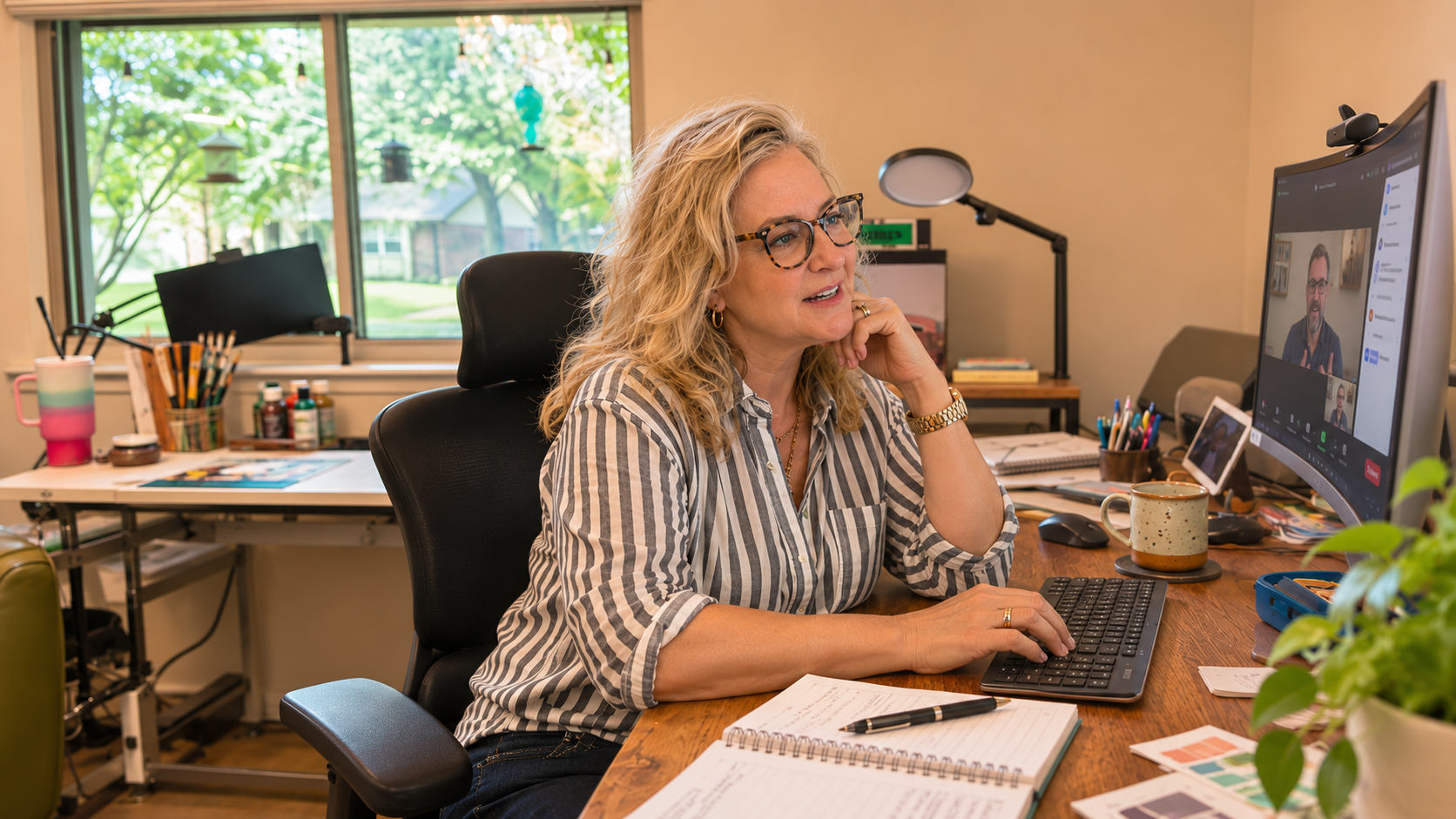
I recently finished working with a small business owner who came to me for help with pricing. She was good at what she did, passionate about her mission, had invested in building her business and had people interested in her services.
Sounds like a pretty good start, right?
But she was struggling with how to fit her business into the rest of her life. She had other responsibilities that needed to take priority, and she was questioning whether she should continue investing in a business when she wasn't sure she had the time to give it what it needed.
Some of the exercises we worked through prompted conversations about what she really wanted from her business, what she could realistically commit to it and whether it made sense to keep going.
I think a lot of business owners can relate to that.
Especially those who have spent years developing expertise in a corporate career and decided to build something of their own. You know how to do the work. You know how to solve problems. You know you bring value to the people you serve.
But being good at what you do and knowing how to build a profitable business around it are two entirely different skill sets.
And nobody hands you a manual for the second one when you leave your corporate job.
Are you making money or just collecting it?
One of the first things we worked on was understanding the actual cost of delivering her services.
Like many service-based business owners, she was thinking primarily about the time she spent with her customers. But that's only part of the job.
There's preparation, communication, scheduling, travel, setup, cleanup, administrative work and follow-up. And let's not forget the time you spend trying to get the business in the first place.
All of that time counts.
Let's use a simple example. Say you charge $500 for a service that takes two hours to deliver.
Not bad. You're making $250 an hour!
Except you're not.
Let's say you have:
$75 in direct expenses
Two hours delivering the service
Two hours preparing, communicating with the client and handling follow-up
Another hour traveling and setting up
You've now earned $425 after direct expenses for five hours of work. That's $85 an hour before you account for your other business expenses.
If you want to compensate yourself at $75 an hour for those five hours, that leaves $50 for the business.
And that $50 still needs to help cover things like insurance, software, marketing and equipment replacement before you can call what's left profit.
Paying yourself for doing the work is not the same as making a profit.
Even if you're a solopreneur and everything ultimately ends up in your bank account, I want you to think about those two things separately. Your time has a cost, and your business needs money of its own to operate and grow.
We built a pricing calculator that allowed my client to account for all of that. She could look at different types of bookings, change the assumptions and see whether a particular opportunity made financial sense before she sent a quote.
No more guessing.
Start with what you need your business to do for you
One of my favorite exercises with business owners starts with a very personal question.
What do you actually need your business to contribute to your life?
Maybe you need to replace a corporate salary. Maybe you want to contribute to your retirement savings, pay off debt or take a really nice vacation every year.
Maybe you're building a side hustle while you still have a full-time job. Or you're raising young children and want something of your own that gives you a sense of accomplishment, allows you to contribute financially and keeps you connected to the work you love.
Those are very different situations, and they require very different business strategies.
We worked backward from my client's income goals, the expenses of running her business and the amount of time she could realistically devote to it.
That gave us a much better starting point for pricing than simply looking at what her competitors were charging.
I'm a big believer in competitive research. You need to understand your market, what customers value and what other businesses offer. But your competitors don't know your expenses, your income goals or how much time you have available.
And frankly, you don't know if they're making any money either.
Understanding what your business needs to earn gives you a way to evaluate your options. From there, you can determine whether the market will support your pricing, whether you need to change your packages or whether a different type of customer might be a better fit.
You don't have to take every piece of business
As we worked through her options, we began to see a different direction for her business.
She had already built relationships, generated interest and invested in the resources she needed to deliver her services. She didn't necessarily need to start over or invest more money.
She needed to make better use of what she'd already built.
Rather than trying to fill her calendar, we discussed focusing on a smaller number of well-priced, private group bookings and being selective about larger organizational opportunities.
We also looked at how she could build on existing relationships, create clearer service packages and turn some of the complimentary work she had been doing into paid opportunities.
I understand the temptation to give away your expertise. I've been guilty of it myself. (You're reading some of it right now!)
Free work can be a great investment in your business. I write these articles because I enjoy sharing what I've learned, and because they give people an opportunity to understand how I think and what I might be able to do for them.
Just make sure you know what you're investing in and what you want that investment to accomplish.
My client's new direction still needs to be tested. But she now has the tools to evaluate opportunities and make decisions based on her goals rather than feeling like she needs to say yes to everything.
Revenue is addition. Loyalty is multiplication.
Of course, getting your pricing right is only part of building a sustainable business.
We also worked on her inquiry process and how she presents her services to potential customers. A good proposal helps people understand what they're buying, why it matters and what they can expect from you.
That's where the customer experience begins.
And when you price your services properly, you give yourself the time and resources to deliver the experience you promised. You can take care of your customers without resenting how much time you're spending on them.
That's how you build trust, earn repeat business and give people a reason to recommend you.
I've spent much of my career connecting revenue strategy with service culture because I believe the two belong together. A sale generates revenue today. A customer who trusts you enough to come back and tell their friends about you can generate revenue for years.
Build your business for the season you're in
One of the things I love about consulting with small business owners is getting to know the person behind the business.
My client hired me to help her with pricing, and we did that. But as I learned more about her, her priorities and what she wanted for herself and her business, our conversations evolved.
That's an important part of working with a consultant. What you think you need when you hire someone may be only one piece of what you actually need. The more we learn about each other and collaborate, the better we can develop strategies that make sense for YOUR business and YOUR life.
What we discovered through our exercises was that she didn't need to build a six-figure business right now.
She could build something smaller, earn meaningful income from the work she chose to take on and give herself permission to grow at a pace that allowed her to take care of the other priorities in her life.
Building slowly doesn't mean you're giving up on what your business could eventually become.
Every customer relationship you develop, every process you put in place and everything you learn about your business is part of the foundation you're building for later.
When your circumstances change, you'll have something to build on. You'll understand your costs, know how to price your services and have relationships with people who already know and trust you.
Give yourself some grace. You don't have to build the business you envision five years from now in the next six months.
Build your business for the season of life you're in, and create strategies that will help you grow when that season changes.
For my client, that means building a business worth keeping. One that compensates her for her expertise, allows her to do work she cares about and fits into the life she wants to live.
And I think that's a pretty good definition of success.
If you're struggling with pricing, packaging or figuring out how to make your business financially sustainable, let's talk. Connect with me about a strategy session, and let's figure out what makes sense for you and the business you want to build.
